Whatscart
Building a Better Way to Sell
Through WhatsApp
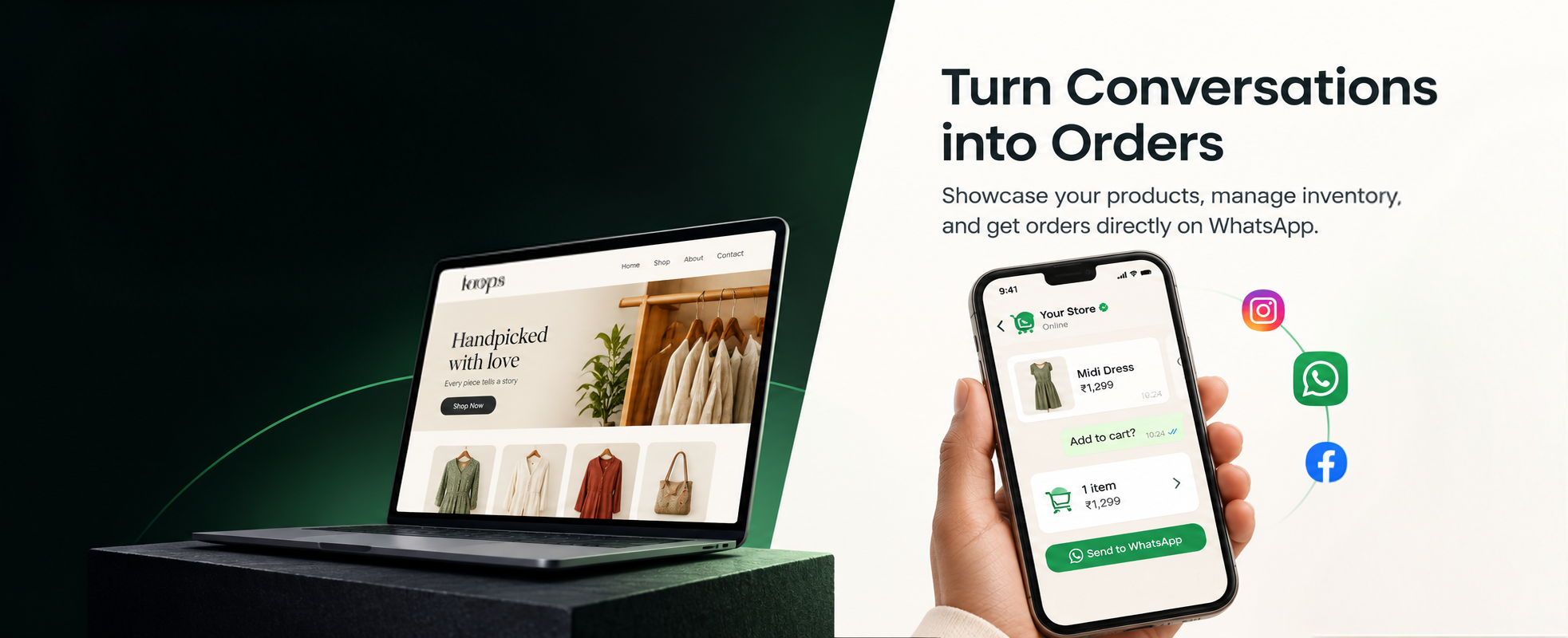
We were about to build
another useless app.
But we didn’t.
What is Whatscart
Whatscart gives small businesses selling through WhatsApp, Instagram, and Facebook everything they need to build a professional online presence. Create a branded storefront in minutes, showcase products, manage inventory, track business performance with analytics, and improve discoverability with built-in SEO all from one place.
Team

Bhuvaneshwari K
Product and design
Ebinesh A
Engineering and product
A business was ready to sell, but the product was hard to find
Many small businesses sell through WhatsApp, Instagram, and Facebook. Their products live in camera rolls, reels, chat threads, screenshots, and forwarded images. The goal wasn't to build another e-commerce platform.
We wanted to make creating a professional online presence feel simple enough for any business owner.
The pattern behind SMB selling in India
Small and Medium-sized BusinessA bakery owner showed us what selling through WhatsApp looked like in practice: product photos were buried in chats, customers repeatedly asked for prices and availability, and every update meant sending the same information again.
We needed to understand whether this was one business workflow or a broader pattern.
So my co-founder and I spoke with small business owners across garments, handicrafts, home bakery, and gadget retail each already selling through WhatsApp, Instagram, or Facebook.
What we heard
Product photos were scattered across chats and camera rolls.
Customers repeatedly asked for prices and availability.
Business owners forwarded the same images over and over in chat.
Creating a professional online presence felt too technical and pricey.
Across these conversations, a pattern started to appear. The businesses sold different products, but they were struggling with similar problems. We synthesised those recurring issues into a set of product opportunities, which became the foundation of our MVP.
Research to product opportunity
Existing platforms such as Dukaan, Bikayi and chattybao helped businesses create online stores, but setting up, uploading products, and managing the storefront could still feel like work.
That created a product decision for us:
Whatscart should not ask small-business owners to learn e-commerce. It should make e-commerce feel like an extension of how they already sell.
Principles of whatscart
A business should be able to create a storefront in minutes.
A product should be uploaded with minimal effort.
Every shared product should lead customers back to a clear product page.
From opportunity to MVP
The research showed us the problem. The competitive review showed us the gap.
The next challenge was deciding what Whatscart should do first.
Ideas
Integrating local language. Making the app vernacular
Customized domain for each business
Basic analytics and metrics
Creating storefront in minutes with basic branding
Bulk share with creating templates so they can share it again - Catalog (All shared under one link)
After research, our feature list became very long.
Our first instinct was to build everything: inventory, analytics, promotions, ordering, SEO, customer management, and more.
That would have created a larger product, but not necessarily a better MVP.
We used three questions to prioritise each idea:
- 1Does this solve a problem we actually heard?
- 2Will a business owner use it on day one?
- 3Can we realistically build and support it for the first launch?
Phases of MVP
Customized domain Domain Creation for each company
Basic branding for storefront
Menu Creation/Modify
Basic Analytics and metrics for business
Bulk share (Whatsapp Marketing) with creating templates so they can share it again - Catalog (All shared under one link)
Discounts & Promotions
Different themes & layouts
Vernacular app
Quick Prototype
By this point, we knew what we wanted to build. The next challenge was making sure everyone imagined the same product. Instead of spending weeks designing high-fidelity screens, I used Stitch to quickly prototype the app. The goal wasn't pixel perfection. It was alignment.
I wanted my co-founder to understand the product, the navigation, and the overall experience before writing a single line of code.
Within a short time, we had something we could click through, discuss, and improve together. That prototype became the starting point for development.
With the prototype in place, we finally had something everyone could align on.
From this point, development and design happened side by side.
We deleted half the product while building
We started by designing for eight different business categories.
It sounded exciting.
It wasn't a great MVP. 😅
So we made a difficult decision.
Instead of trying to solve everything, we focused on the three categories where we saw the strongest demand:
Core feature
Catalog
Experience
Most small businesses sell by sending hundreds of product images on WhatsApp.
It works...
Until it doesn't.
Customers keep asking:
• “Price?”
• “Is this available?”
• “Can you send that image again?”
Businesses keep sending the same photos over and over.
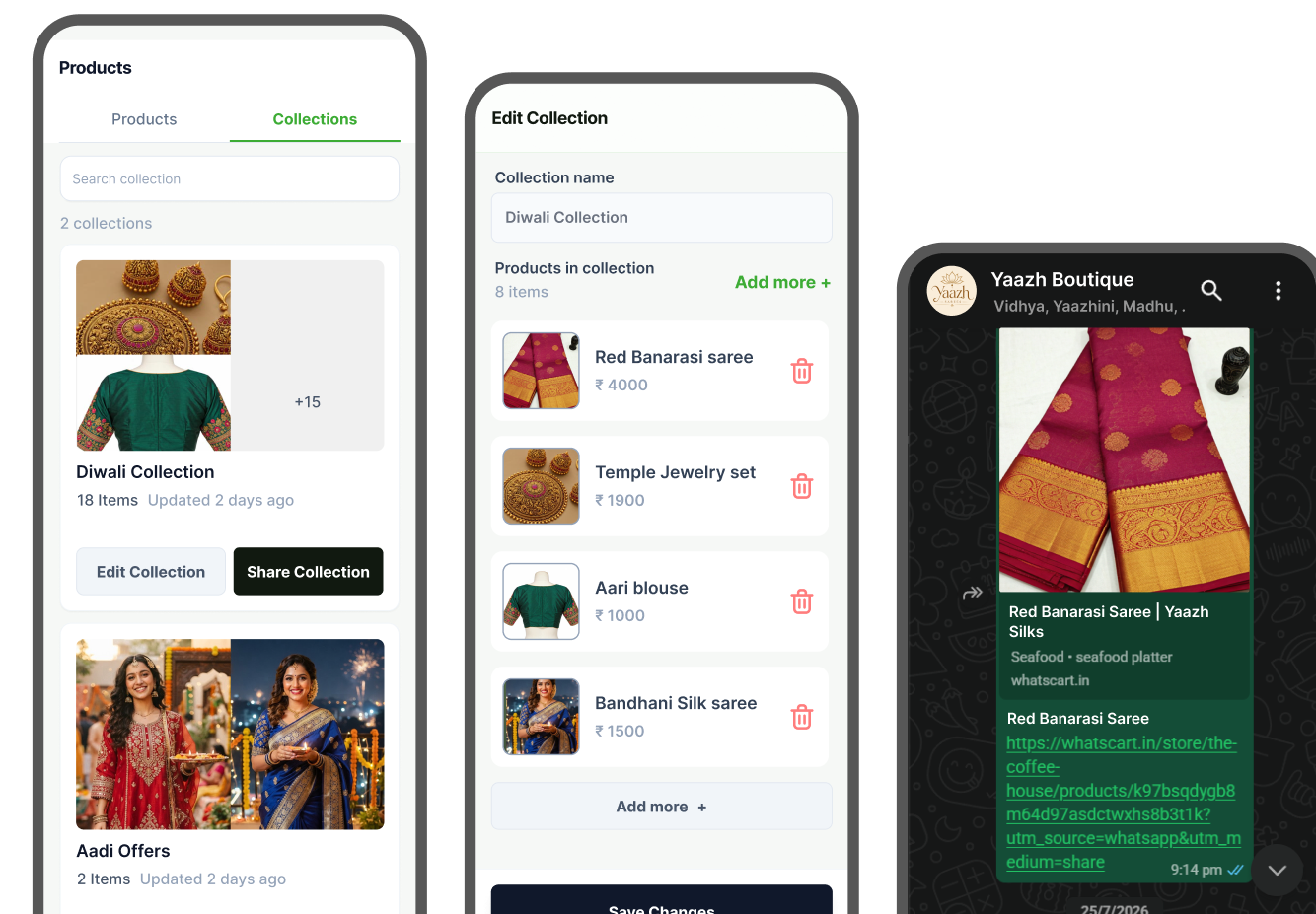
Why this feature mattered
For Businesses
- Share once instead of repeatedly forwarding images.
- Update products without sending a new catalogue every time.
- Reduce repetitive customer questions.
For Customers
- No storage filled with hundreds of downloaded images.
- No screenshots just to remember a product.
- Every shared image leads back to the product page.
Branded Storefront in minutes
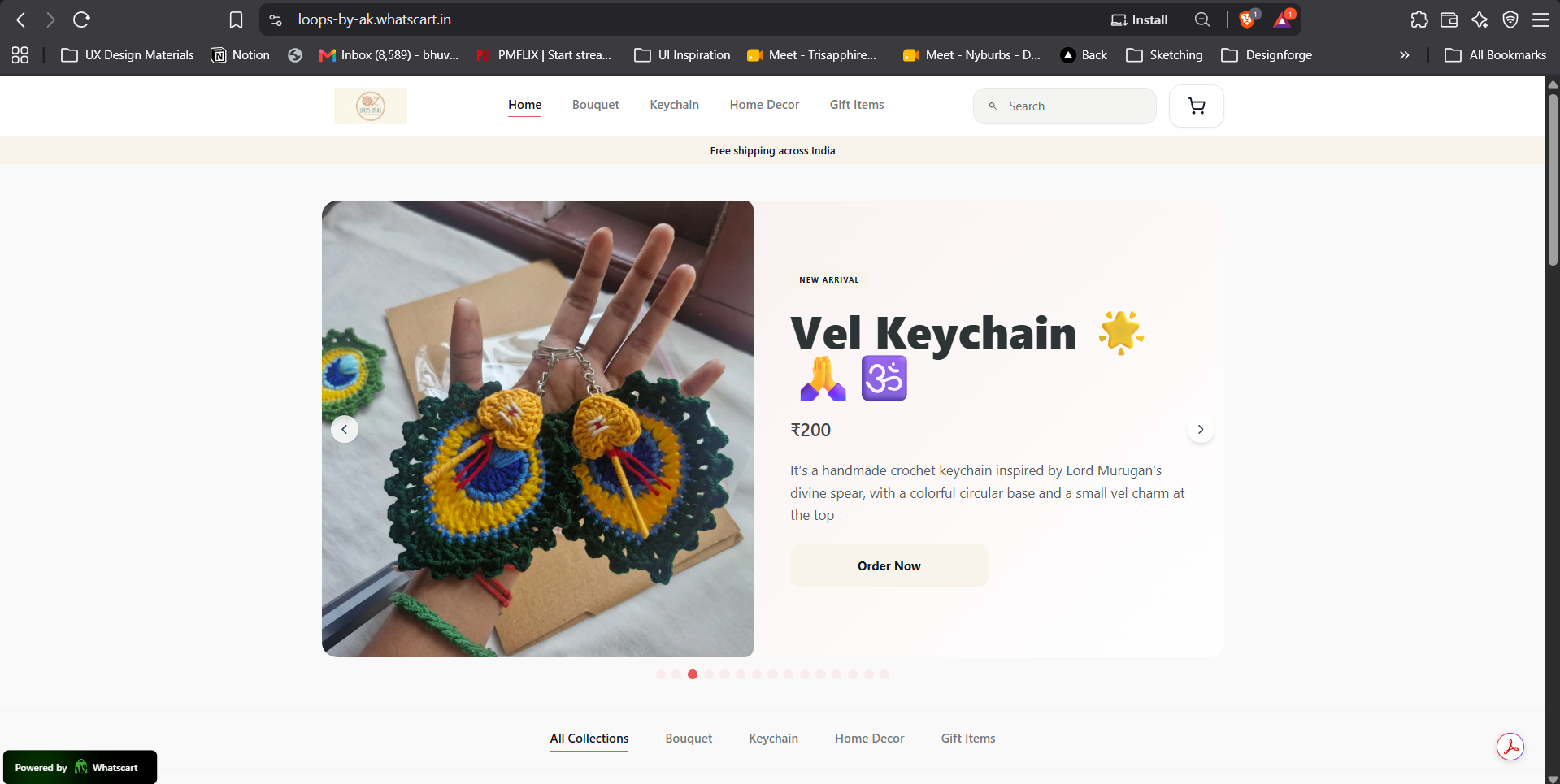
One of the biggest goals from day one was making it incredibly easy for any business to have its own branded storefront. Most small business owners aren't tech-savvy, and I didn't want creating a website to become another hurdle. So I focused on keeping everything simple—onboarding takes around 5 minutes, and adding each product takes less than 5 minutes. The idea was straightforward: if someone wants to build their digital presence, they should be able to do it without needing technical skills.
What’s Happening now
That’s us figuring about marketing